In today’s digital world, having a website is only the first step toward building an online presence. Your website also needs to be visible when potential customers search for products, services, or information related to your business.
This is where SEO, or Search Engine Optimization, becomes important.
SEO helps businesses improve their visibility in search engine results. A well-planned SEO strategy can help a website attract relevant visitors, build credibility, and generate potential customers over time.
In this guide, we will explain the basics of SEO, how it works, its major components, and how it can help your business grow online.
What Is SEO?
SEO stands for Search Engine Optimization. It is the process of improving a website and its content so that search engines can better understand and rank its pages for relevant searches.
Search engines such as Google use automated systems to discover, understand, and organize web pages. When someone searches for something, the search engine tries to show results that are relevant and useful for that particular query.
For example, imagine that you own a digital marketing agency in Lucknow. A potential customer might search for:
- Digital marketing agency in Lucknow
- SEO services in Lucknow
- Social media marketing company near me
If your website provides useful information related to these searches and follows good SEO practices, your pages may have an opportunity to appear in relevant search results.
SEO does not guarantee a particular ranking. Search results depend on many factors and can change over time.
Why Is SEO Important for Businesses?
One of the biggest advantages of SEO is that it can help people discover your business when they are actively searching for something related to your products or services.
Consider a customer who searches for “best website designer near me.” They already have a need. If your website appears in relevant search results, that person may visit your website and learn more about your services.
SEO can therefore help businesses connect with people who are already interested in a particular topic, product, or service.
Another advantage is that SEO can support long-term website traffic. Unlike paid advertising, where traffic generally depends on an active advertising budget, organic search traffic can continue as long as your pages remain useful, relevant, and visible.
How Does SEO Work?
SEO involves several different activities. Search engines analyze many aspects of a website and its content when determining which pages may be relevant to a search.
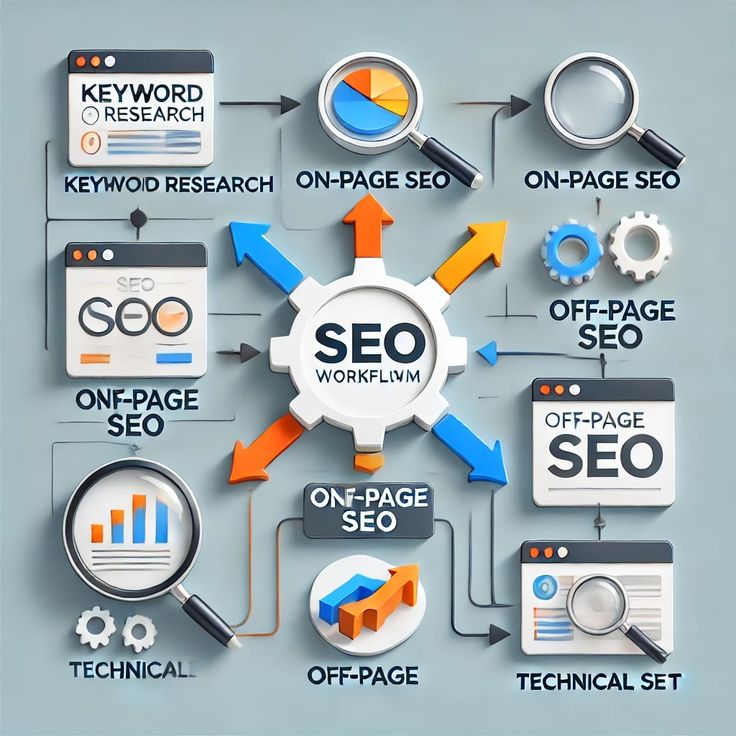
A basic SEO strategy usually includes keyword research, quality content, technical optimization, website structure, and authority-building activities.
The goal is not simply to add keywords to a page. Modern SEO focuses on creating useful content that satisfies the searcher’s needs while making the website easy for search engines to understand.
1. Keyword Research
Keyword research is one of the foundations of SEO.
A keyword is a word or phrase that people enter into a search engine.
For example, a person looking for marketing services might search for “digital marketing services,” “SEO company,” or “social media marketing agency.”
Keyword research helps businesses understand what their target audience is searching for.
However, choosing keywords only because they have high search volume is not always a good strategy. The keyword should also be relevant to your business and match the type of customer you want to attract.
2. On-Page SEO
On-page SEO focuses on elements that can be improved directly on your website.
These elements can include:
- Page titles
- Headings
- Website content
- Meta descriptions
- URLs
- Internal links
- Image descriptions
- Content structure
For example, if you publish an article about SEO basics, the title, headings, introduction, and main content should clearly communicate what the article is about.
Good on-page SEO makes your content easier for both users and search engines to understand.
3. Technical SEO
Technical SEO focuses on the technical aspects of a website.
A technically healthy website should be easy for search engines to crawl and understand. It should also provide a good experience for visitors.
Important areas can include website speed, mobile usability, secure connections, website structure, indexing, and crawlability.
If a website loads very slowly or has technical problems that prevent important pages from being discovered, its SEO performance may be affected.
4. Content SEO
Content plays an important role in SEO.
Businesses can create useful content such as blog posts, guides, tutorials, FAQs, case studies, and service pages.
The purpose should not be to publish content simply for search engines. Instead, content should answer real questions and provide useful information to the target audience.
For example, a web design company could publish an article explaining how much a business website may cost, what features it needs, and how to choose a suitable platform.
This type of content can help potential customers while also creating opportunities to appear for relevant searches.
5. Local SEO
Local SEO is particularly useful for businesses that serve customers in specific locations.
For example, a restaurant, salon, medical store, coaching center, or local service provider may want to appear when people search for businesses in their area.
Local SEO can involve creating and maintaining an accurate Google Business Profile, keeping business information consistent, collecting genuine customer reviews, and creating location-relevant website content.
For a local business, being visible in relevant local searches can help increase website visits, calls, inquiries, and physical visits.
Benefits of SEO for Your Business
Increased Online Visibility
SEO can help your website appear for relevant searches, making it easier for potential customers to discover your business.
Relevant Website Traffic
Good SEO focuses on attracting visitors who are interested in the topics, products, or services you offer.
Better User Experience
Many SEO improvements also make websites easier to navigate and use. Clear headings, helpful content, fast pages, and mobile-friendly designs can improve the visitor experience.
Long-Term Growth
SEO is generally a long-term marketing activity. Results can take time, but useful content and a well-maintained website can continue attracting organic visitors.
Builds Online Credibility
A professional website with useful content can help demonstrate knowledge and expertise in a particular industry.
SEO vs Paid Advertising
SEO and paid advertising work differently.
With paid advertising, businesses pay platforms to display advertisements according to campaign settings and budgets.
SEO focuses on improving organic search visibility.
This does not mean one approach is always better than the other. Many businesses use both strategies. Paid advertising can provide visibility for specific campaigns, while SEO can support long-term organic growth.
The right combination depends on the business, audience, budget, competition, and marketing objectives.
How to Start SEO for Your Business
If you are new to SEO, start with the basics.
First, understand your target audience and identify the questions they are searching for. Then perform keyword research and create useful content around relevant topics.
Next, optimize your website pages, improve internal linking, check technical issues, and make sure your website works well on mobile devices.
You should also monitor your performance using appropriate analytics and search tools.
SEO requires testing and continuous improvement. Search behavior, competition, and search engine systems can change, so businesses should regularly review their strategy.
Conclusion
SEO is an important part of digital marketing that can help businesses improve their visibility in search engines and attract relevant visitors.
Keyword research, on-page SEO, technical SEO, content creation, and local SEO are some of the major areas businesses should understand.
However, SEO is not a quick shortcut to guaranteed rankings. It is a long-term process that requires useful content, technical improvements, consistency, and regular analysis.
By focusing on the needs of your audience and building a website that is useful, accessible, and easy to understand, your business can create a stronger foundation for organic search visibility and online growth.
Leave a Reply